
Introduction:
For much of modern scientific history, biology and robotics have developed along separate paths. Biology has sought to understand living systems, while robotics has focused upon designing machines capable of performing increasingly complex physical tasks. Although both disciplines have advanced rapidly over recent decades, they have traditionally relied upon fundamentally different materials, principles and methods.¹
Recent developments in synthetic biology and bioengineering are beginning to blur this distinction. Researchers have demonstrated that collections of living cells can be assembled into programmable biological structures capable of movement, self-organisation and the performance of simple functional tasks.² Rather than relying upon metal components, electronic circuits or artificial actuators, these systems derive their behaviour entirely from living tissue.
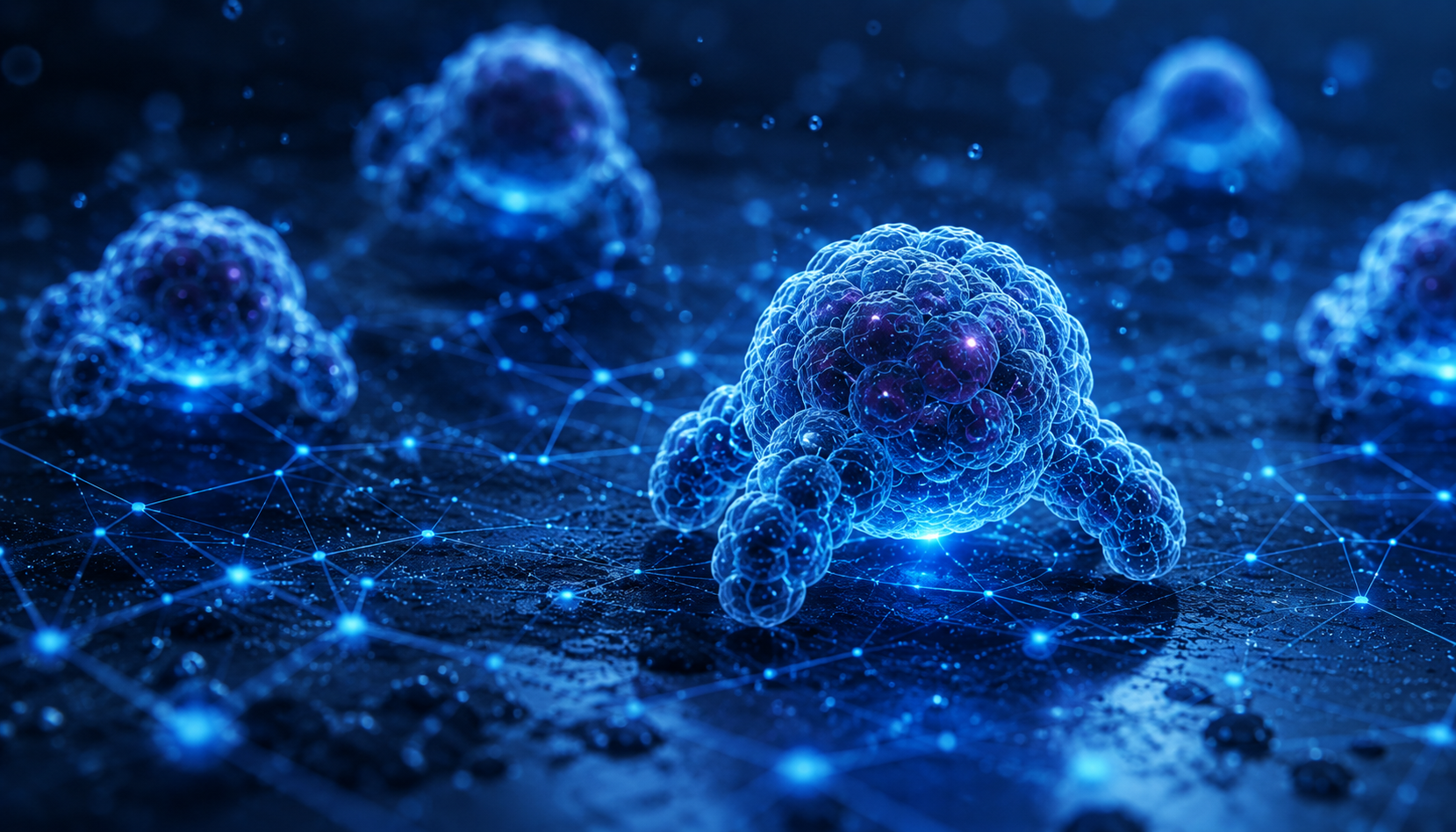
Among the most notable examples are xenobots and anthrobots. Xenobots are microscopic biological constructs assembled from frog stem cells, while anthrobots are created using human cells capable of organising themselves into functional structures.³ Although neither resembles conventional robots, both exhibit coordinated behaviour that can be directed towards specific objectives.
These developments represent more than an unusual scientific curiosity. They suggest the possibility of creating programmable living systems capable of assisting in medicine, environmental science and biological research. At the same time, they raise important questions regarding the definition of life, the boundaries of engineering and the ethical implications of designing living organisms for human purposes.
The question is no longer whether biology and robotics can intersect, but how society should respond as the distinction between living organisms and engineered systems becomes increasingly difficult to define.
From Machines to Living Systems
Traditional robots operate through mechanical components, electronic control systems and programmed software. Their behaviour is determined by sensors, algorithms and actuators that translate digital instructions into physical movement. Even the most advanced robotic systems ultimately depend upon manufactured materials and external sources of energy.
Living robots operate according to entirely different principles. Instead of being built from artificial components, they are assembled from living cells that naturally possess the ability to communicate, adapt and organise themselves.⁴ Researchers guide these biological processes to create structures capable of performing specific functions without introducing conventional mechanical hardware.
Xenobots illustrate this approach particularly clearly. Developed using stem cells derived from the African clawed frog (Xenopus laevis), these microscopic structures were assembled into new configurations that allowed them to move, transport microscopic particles and, under certain laboratory conditions, exhibit forms of collective behaviour.⁵ Their movements arise not through motors or electronics but from the natural contractile properties of living cells.
Anthrobots extend this concept further by using human cells rather than amphibian tissue. Researchers have shown that adult human airway cells can self-organise into mobile biological structures capable of navigating laboratory environments.⁶ Early experiments suggest that these constructs may also influence the repair of damaged neural tissue, highlighting potential applications that extend beyond simple movement.
Rather than replacing conventional robotics, these technologies introduce an entirely new category of engineered biological systems that combine characteristics of both living organisms and programmable machines.
Applications in Regenerative Medicine
One of the most promising applications of living robots lies within regenerative medicine. Modern healthcare increasingly seeks not only to treat disease but also to repair or regenerate damaged tissues. Living biological systems may eventually provide new methods for achieving these objectives.
Because xenobots and anthrobots consist entirely of living cells, they possess characteristics that conventional medical devices cannot easily replicate. They are biodegradable, naturally compatible with biological environments and capable of interacting directly with surrounding tissues.⁷
Researchers are investigating whether programmable cellular structures could one day assist with wound healing, tissue regeneration and the targeted removal of harmful biological material. Experimental studies involving anthrobots have demonstrated an ability to stimulate repair within damaged neuronal tissue under laboratory conditions, suggesting potential future applications in neurological medicine.⁸
While these developments remain at an early stage, they illustrate a broader transition in biomedical engineering. Instead of implanting artificial devices, future therapies may increasingly involve biological systems specifically designed to cooperate with the body’s own regenerative processes.
Significant scientific and regulatory challenges remain before such technologies can become clinically viable. Nevertheless, regenerative medicine represents one of the areas in which programmable living systems may ultimately deliver substantial practical benefit.
Drug Delivery and Precision Medicine
Drug delivery remains one of the most persistent challenges within modern medicine. Many pharmaceutical treatments affect healthy tissue alongside diseased cells, reducing effectiveness while increasing unwanted side effects. Precision medicine seeks to overcome this limitation by delivering therapies only where they are required.
Living robots may contribute to this objective through their ability to navigate biological environments while interacting naturally with surrounding tissues. Researchers envision microscopic biological constructs capable of transporting therapeutic agents directly to specific locations within the body before safely degrading once their task has been completed.⁹
Unlike synthetic nanoparticles or mechanical microrobots, biological systems may prove better suited to navigating complex cellular environments because they are composed of the same biological materials as the tissues they encounter. This compatibility may reduce immune responses while improving the precision of targeted treatments.
Although practical medical applications remain several years away, ongoing research continues to explore how programmable biological structures might contribute to future treatments for cancer, inflammatory diseases and tissue injury. If successful, such approaches could fundamentally alter how medicines are delivered within the human body.
Biological Computation and Collective Intelligence
Living robots also challenge conventional ideas about computation. Traditional computers process information electronically through semiconductor circuits, while biological systems process information through chemical signalling, cellular communication and self-organisation.
Researchers increasingly view living tissues as capable of performing forms of biological computation. Rather than following explicit digital instructions, groups of cells communicate continuously with one another, adapting collectively to changes within their environment.¹⁰ These interactions enable biological systems to solve complex organisational problems without centralised control.
Xenobots provide a striking example of this phenomenon. Although individual cells possess relatively limited capabilities, their collective behaviour allows the assembled structure to exhibit coordinated movement and adaptive responses that emerge from interactions between the cells themselves rather than from conventional programming.
Understanding these processes may eventually contribute to new forms of bio-inspired computing, synthetic tissues capable of responding intelligently to environmental conditions and hybrid technologies that combine biological and artificial intelligence. While such possibilities remain largely experimental, they illustrate how living systems may expand existing concepts of both robotics and computation.
Ethical and Governance Challenges
The emergence of programmable living systems raises important ethical questions that extend beyond their immediate scientific applications. Unlike conventional robots, xenobots and anthrobots occupy an uncertain position between engineered technology and living biology, challenging established categories used within both science and regulation.¹¹
One concern involves the governance of increasingly sophisticated biological engineering. As researchers develop greater control over cellular organisation, questions arise regarding appropriate oversight, laboratory safety and long-term monitoring of biological systems designed to perform specific tasks.
Public perception also presents significant challenges. The phrase “living robot” may evoke concerns associated with science fiction despite the fact that existing xenobots and anthrobots remain microscopic, highly limited and incapable of independent survival outside carefully controlled laboratory environments. Clear scientific communication therefore becomes essential to distinguish genuine capabilities from speculative narratives.
Ethicists have also questioned how future developments should be regulated if biological systems become increasingly autonomous or capable of more complex behaviour. Although current technologies remain far from this scenario, governance frameworks often develop more effectively when established before technologies mature rather than after widespread deployment.¹²
As with artificial intelligence and gene editing, responsible innovation will depend not only upon scientific progress but also upon transparency, public engagement and proportionate regulatory oversight.
Concluding Observations
Living robots represent one of the most unusual developments in modern science because they challenge assumptions about both biology and engineering. By assembling living cells into programmable biological structures, researchers are demonstrating that complex behaviour can emerge without conventional machinery, electronics or artificial materials.
Although xenobots and anthrobots remain experimental technologies, they illustrate how advances in synthetic biology may eventually influence regenerative medicine, targeted drug delivery and entirely new approaches to biological computation. At the same time, these developments raise important ethical questions regarding the design, governance and societal acceptance of programmable living systems.
The distinction between organisms and machines has long provided a clear conceptual boundary within science. Living robots suggest that this boundary may become increasingly fluid as biological engineering continues to advance.
Whether these technologies ultimately become routine medical tools or remain specialised research platforms, they demonstrate that some of the most significant scientific innovations of the coming decades may emerge not from building increasingly sophisticated machines, but from learning how to programme life itself.
Footnotes
- James A Shapiro, Evolution: A View from the 21st Century (FT Press 2011).
- Douglas Blackiston, Sam Kriegman and Michael Levin, ‘A Scalable Pipeline for Designing Reconfigurable Organisms’ (2021) Proceedings of the National Academy of Sciences.
- Gizem Gumuskaya et al, ‘Anthrobots: Motile Living Biobots from Adult Human Cells’ (2023) Advanced Science.
- Michael Levin, ‘Technological Approach to Mind Everywhere’ (2022) Frontiers in Systems Neuroscience.
- Sam Kriegman et al, ‘Kinematic Self-Replication in Reconfigurable Organisms’ (2021) Proceedings of the National Academy of Sciences.
- Gizem Gumuskaya et al, ‘Anthrobots: Motile Living Biobots from Adult Human Cells’ (2023) Advanced Science.
- National Institutes of Health, Regenerative Medicine Research (2024).
- ibid.
- Nature Reviews Bioengineering, ‘Biohybrid Systems for Precision Medicine’ (2024).
- Michael Levin and Daniel Dennett, ‘Cognition All the Way Down’ (2020) Aeon; see also related work in developmental bioelectricity.
- UNESCO, Recommendation on the Ethics of Artificial Intelligence (2021).
- Nuffield Council on Bioethics, Emerging Biotechnologies and Governance (2024).